
A Smarter Way for Hotels to Sell More Wine Without Labor Costs
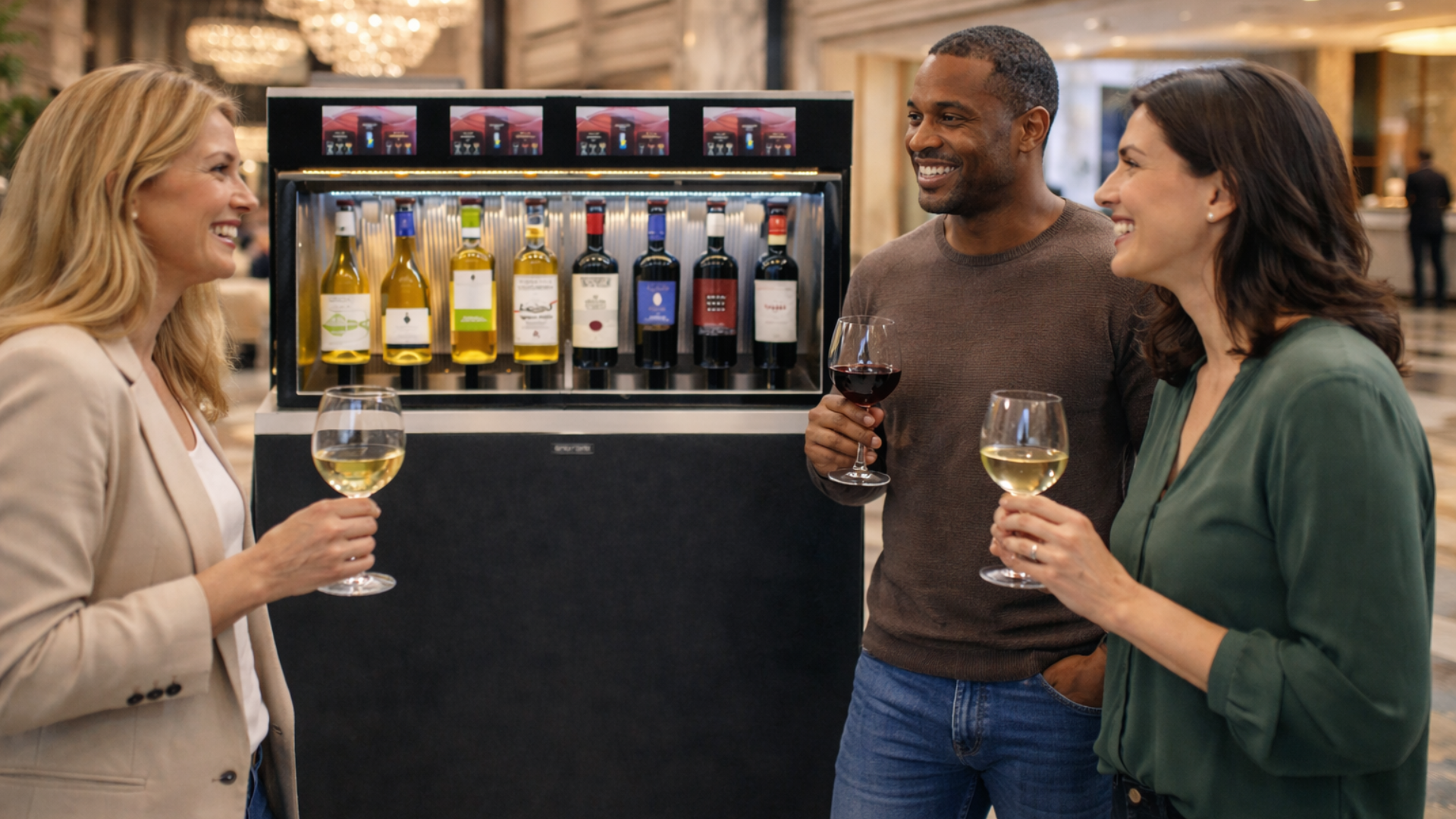
Hotels are uniquely positioned to sell wine. Guests are on property, they are relaxed, and they are already spending. And yet, most hotels dramatically underperform in wine sales.
The reason is simple. Wine is still treated like a staff dependent service instead of a scalable revenue stream. In many hotels, wine lives in the bar, the restaurant, or room service menus. But not every hotel has a full service bar, and even when they do, wine sales are limited to those staffed hours and locations. Outside of those touchpoints, wine sales stall. Without a staff member to recommend, upsell, or explain, guests default to beer or cocktails, premium wines rarely move, and revenue opportunities go untouched.
At the same time, hotels are dealing with rising labor costs, limited staff availability, inconsistent service quality across shifts, and high turnover in food and beverage roles. Adding a sommelier or dedicated wine staff is not realistic for most properties.
So the question becomes clear. How do you sell more wine without adding labor, regardless of whether you have a bar or not?
The answer is to rethink wine as a self service experience. Modern self pour wine dispensing technology allows hotels to offer wine by the glass without relying on staff. Guests can explore wines, try tasting flights, and pour at their own pace, creating a more engaging and interactive experience.
This system also solves one of the biggest challenges in any wine program. Preservation. Traditional wine service forces operators to limit their offerings because once a bottle is opened, the clock starts. Higher end wines carry more risk, often leading to waste when bottles are not finished. With a wine dispensing system, each bottle is preserved, extending its life and maintaining quality. This allows hotels to confidently offer premium and high end wines by the glass without the fear of spoilage or having to pour product down the drain.
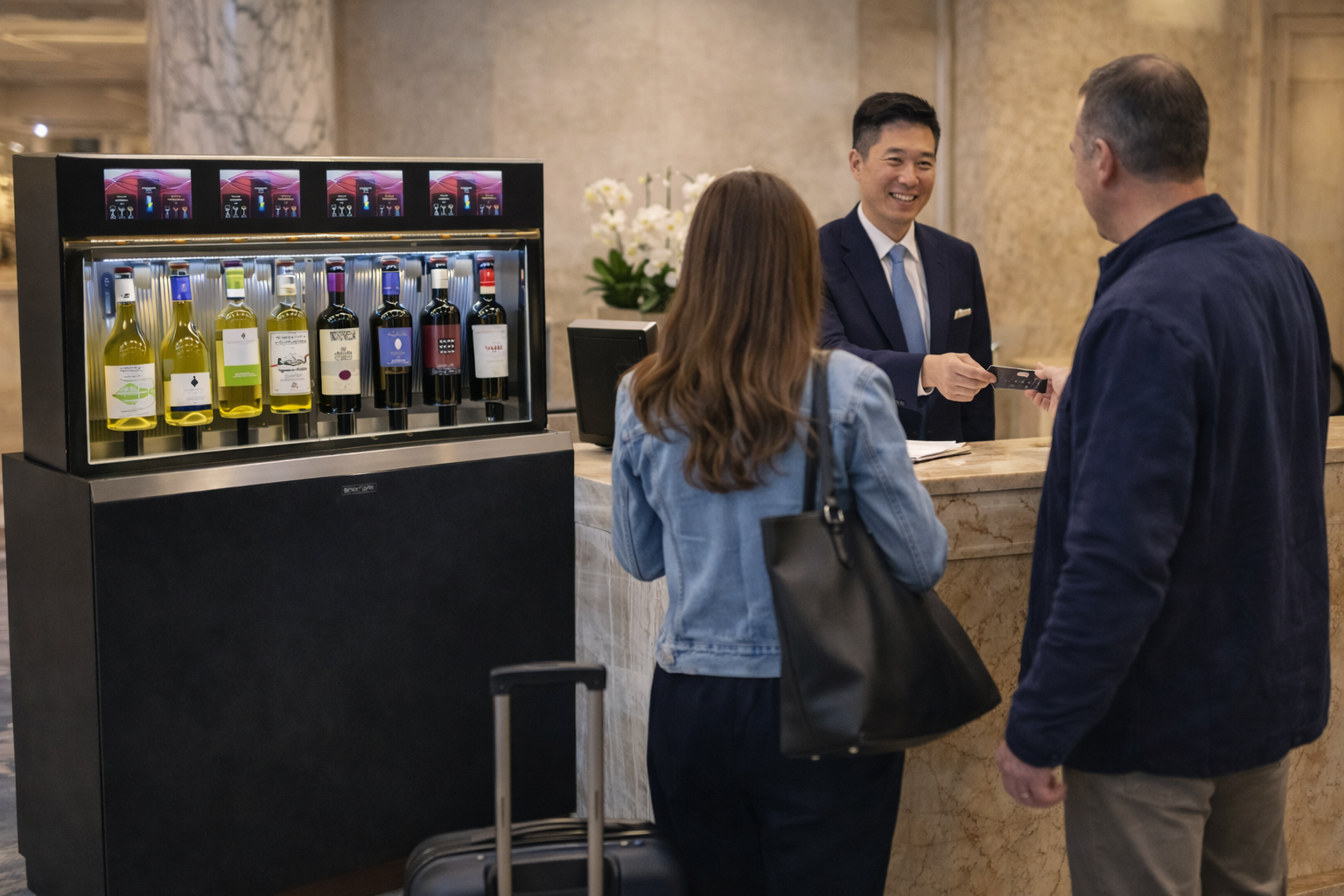
This approach works for hotels with existing bars and for those without one. In properties without a bar, guests can simply check in at the front desk and receive a pour pass that allows them to access the wine system. This creates a seamless experience without requiring additional staffing or infrastructure. For hotels that do have a bar, the system enhances service, extends availability beyond staffed hours, and creates new opportunities for incremental revenue.
Forward thinking hotels are placing wine dispensing systems in key areas across the property. Lobby lounges allow guests to enjoy a glass while checking in or socializing. Rooftop and pool areas create a premium upsell without adding staff. Executive lounges elevate the experience while maintaining portion control. Restaurant entry points encourage pre dinner tastings and increase overall spend.
This approach works because guests spend more when they control the experience. When given the opportunity to taste, they are more likely to try premium wines, order additional pours, and upgrade their selections.
It also extends revenue beyond traditional service hours. Wine is no longer limited to bar hours or restaurant availability. It becomes a revenue opportunity throughout the day and evening without requiring additional labor.
At the same time, wine dispensing systems reduce waste and protect margins. They eliminate overpouring, preserve open bottles, and ensure consistent serving sizes. This creates a more efficient and profitable wine program.
The system also acts as a silent salesperson. Instead of relying on staff, tasting notes, pricing, and wine information are presented directly to the guest. This creates a seamless and engaging experience while driving sales.
Today’s hotel guests are looking for more than just a drink. They want an experience. Self pour wine transforms passive ordering into interactive discovery. It encourages multiple tastings instead of a single glass and creates memorable moments that increase both dwell time and overall spend.
Hotels that implement this approach see higher wine by the glass sales, increased average check sizes, stronger premium wine movement, reduced labor dependency, and less waste. Most importantly, they generate more revenue from the same space without increasing complexity.
The reality is that hotels do not have a wine problem. They have an engagement problem. Wine does not need more menu space or more staff to perform better. It needs accessibility, interaction, and experience.
With the right technology, hotels can transform wine into a self service, revenue generating amenity that enhances the guest experience while driving measurable financial results.
