
How Offering Sparkling Wine by the Glass Can Increase Restaurant Profits
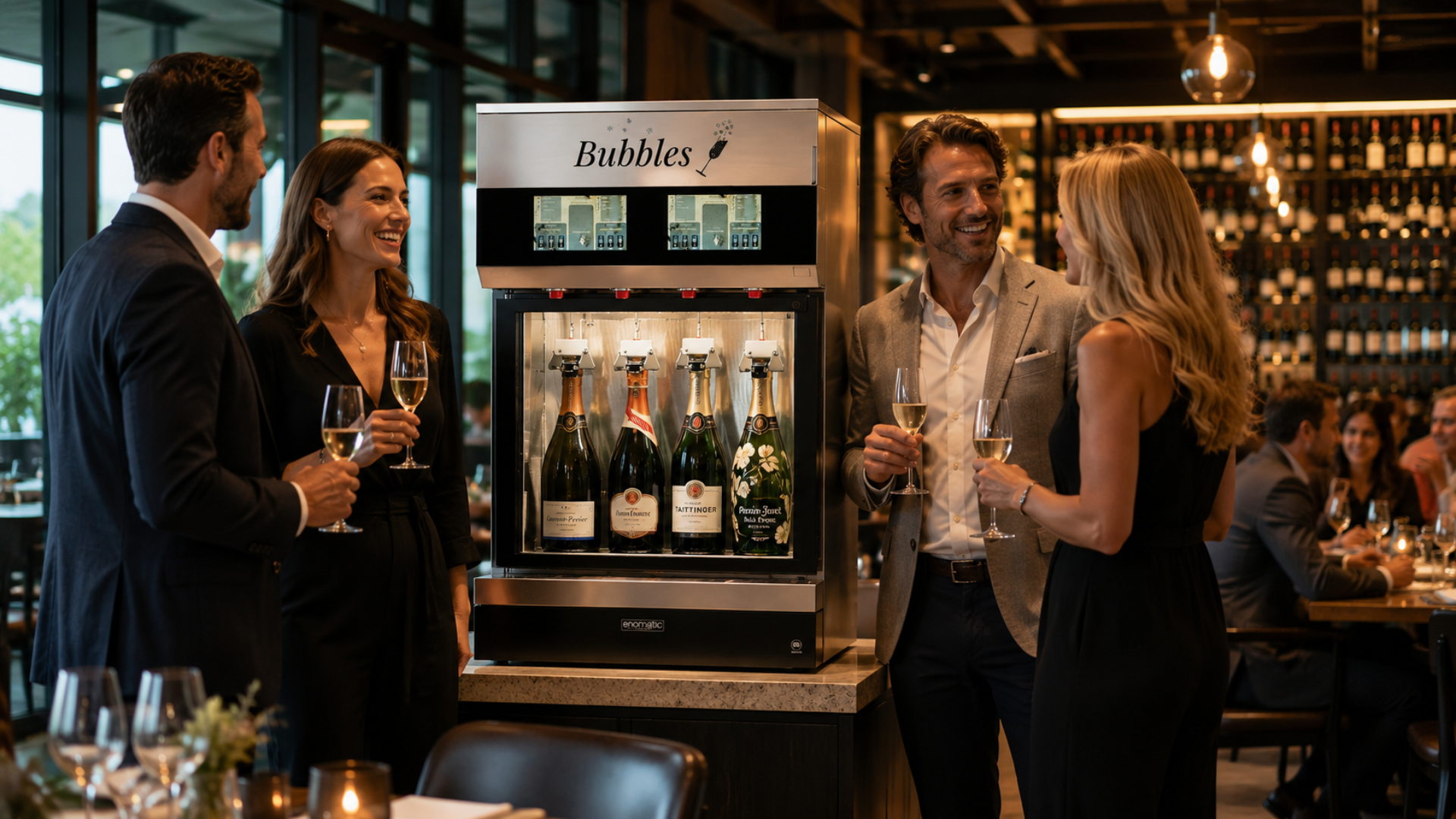
Sparkling wine has long been one of the most profitable beverages on a restaurant menu.
Yet surprisingly, many restaurants limit their sparkling wine selection to just one or two options—or don't offer it by the glass at all.
The reason isn't guest demand.
It's waste.
Once a bottle of Champagne, Prosecco, Cava, or sparkling rosé is opened, the clock starts ticking. Within hours, the wine begins losing its carbonation and freshness. If the bottle isn't sold quickly, operators are often forced to pour the remaining product down the drain.
For years, this made serving premium sparkling wine by the glass a risky business decision.
Today, that's changing.
Why Sparkling Wine Deserves More Menu Space
Sparkling wine is no longer reserved for weddings and New Year's Eve.
Guests increasingly order bubbles for:
Brunch
Celebrations
Date nights
Happy hour
Pairing with seafood
Before dinner as an aperitif
Many guests don't want an entire bottle. They simply want one exceptional glass.
Restaurants that can confidently serve premium sparkling wines by the glass create an experience that many competitors simply cannot offer.
The Hidden Revenue Opportunity
Imagine being able to offer:
Champagne by the glass
Premium Prosecco
Sparkling Rosé
Vintage sparkling selections
Rotating seasonal sparkling wines
Instead of hoping an entire bottle sells in one evening, every bottle becomes a revenue-producing asset over multiple weeks.
This allows operators to:
Increase average beverage checks
Introduce premium wines guests may not purchase by the bottle
Create sparkling wine flights
Pair sparkling wines with tasting menus and brunch offerings
Differentiate their beverage program from competitors
The result is a wine program that drives higher revenue while creating a more memorable guest experience.
Eliminate the Waste That Holds Restaurants Back
Historically, waste has been the biggest barrier to selling sparkling wine by the glass.
Traditional preservation methods simply cannot maintain carbonation for long enough to make premium by-the-glass programs profitable.
Enomatic Bubbles changes that.
Using a pressurized preservation system, Enomatic Bubbles maintains the freshness, carbonation, and quality of sparkling wines for up to three weeks after opening. Every pour delivers the same lively bubbles and flavor profile as the first glass.
That means restaurants can confidently expand their sparkling wine offerings without worrying about spoilage.
More Than Preservation
Preserving wine is only part of the opportunity.
With Enomatic Bubbles, restaurants can also:
Offer multiple sparkling wines simultaneously
Serve guests through staff-controlled dispensing or self-pour
Maintain consistent portion sizes
Improve inventory control
Reduce product loss from over-pouring
The system accommodates up to four refrigerated bottles, making it easy to feature a curated sparkling wine program without requiring extensive bar space.
A Better Guest Experience
Guests love discovering new wines.
Offering sparkling wine by the glass lowers the commitment while encouraging exploration.
Instead of choosing between one expensive bottle or no sparkling wine at all, guests can:
Try a premium Champagne before dinner
Sample a sparkling rosé with appetizers
Compare different styles through tasting flights
Celebrate special occasions with just a single glass
The experience feels elevated while often leading to higher beverage sales.
Sparkling Wine Is No Longer a High-Risk Category
For years, restaurants avoided expanding their sparkling wine selections because the economics didn't work.
Today, preservation technology has changed that equation.
By eliminating waste and extending freshness for weeks instead of hours, restaurants can confidently offer premium sparkling wines by the glass while improving profitability and giving guests more reasons to celebrate.
