
Why Self-Pour Wine Experiences Are More Engaging Than Traditional Tastings
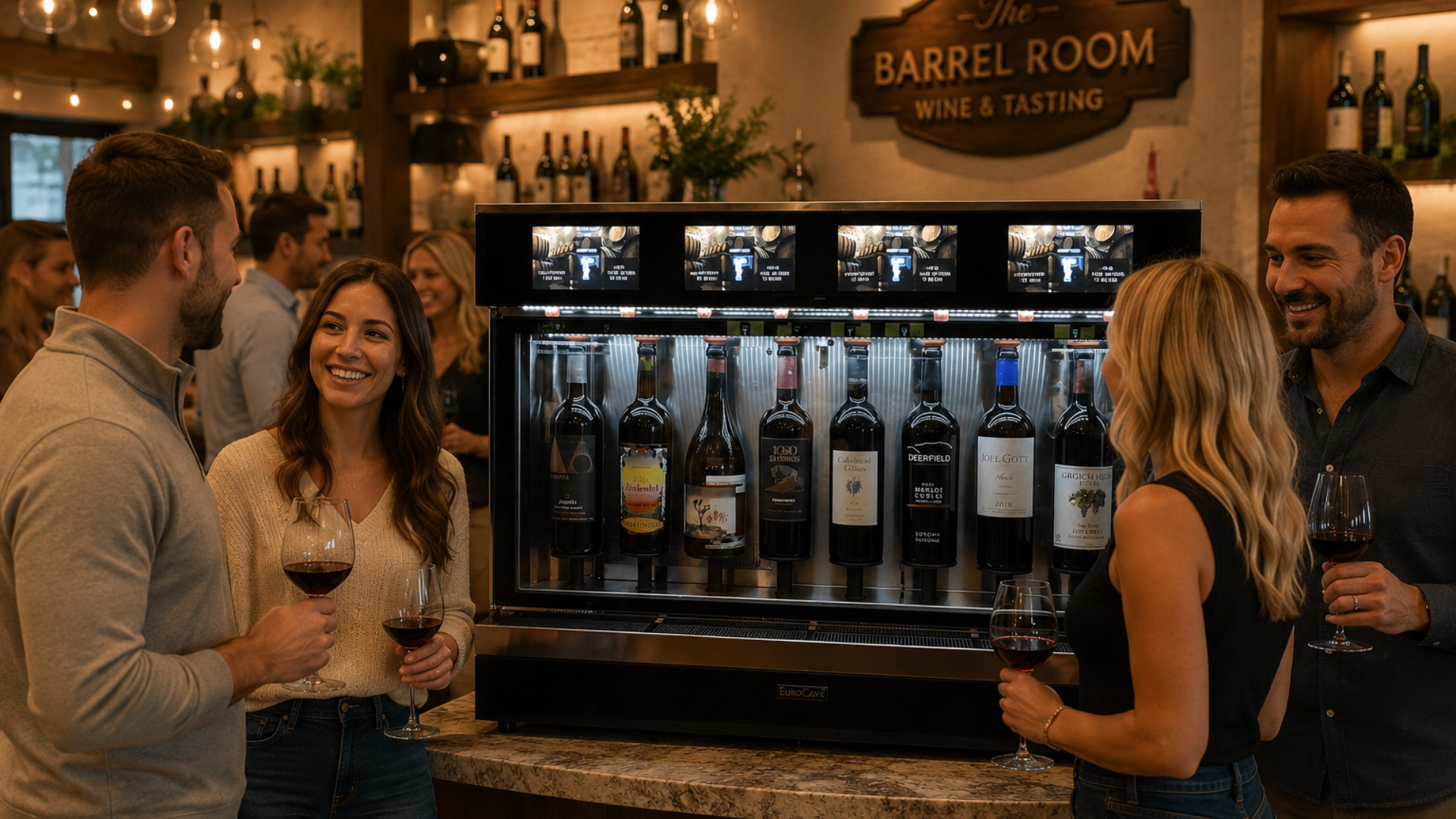
For years, traditional wine service has followed the same formula: a staff member pours a sample, shares a brief description, then moves on to the next guest.
While this approach has worked for decades, many wineries, wine bars, restaurants, and tasting rooms are discovering that self-pour technology can actually create a more engaging and memorable guest experience.
The reason may surprise you.
It isn't because guests want less interaction with staff.
It's because they want better interactions.
Less Time Pouring. More Time Connecting.
During a traditional tasting, staff members spend much of their time performing repetitive tasks:
Opening bottles
Pouring samples
Measuring portions
Refilling glasses
Moving guests through the tasting
While these tasks are necessary, they leave less time for meaningful conversations.
With a self-pour wine dispensing system, guests can serve themselves while staff focus on what matters most:
Learning about each guest's preferences
Explaining the story behind the wines
Discussing vineyards, regions, and winemaking techniques
Answering questions
Recommending additional wines
Building genuine relationships
Instead of acting primarily as pourers, team members become educators and hosts.
Guests Explore at Their Own Pace
Every wine enthusiast is different.
Some guests want to sample three wines.
Others want to compare twelve.
Traditional tastings often follow a predetermined sequence and pace, which can leave guests feeling rushed or limited.
Self-pour technology gives guests the freedom to:
Spend more time with wines they enjoy
Skip styles they aren't interested in
Compare similar varietals side by side
Return to a favorite before making a purchase
The experience becomes personalized rather than scripted.
Smaller Pours Encourage Exploration
One of the biggest advantages of commercial wine dispensing systems is the ability to offer precise pour sizes.
Rather than committing to a full tasting pour, guests can choose a small sample before deciding whether they want more.
This encourages exploration while reducing hesitation.
It also creates opportunities to feature premium wines that guests may not have otherwise considered purchasing.
A guest may hesitate to order a full glass of a reserve Cabernet or vintage Pinot Noir.
A one-ounce sample, however, feels approachable.
Many operators find this leads to increased interest in higher-end wines and greater confidence in purchasing bottles.
Premium Wines Become More Accessible
High-value wines are often reserved for special tastings because of concerns about waste and inconsistent pours.
Modern wine dispensing systems help preserve wine freshness while delivering consistent portions.
That allows operators to confidently feature:
Reserve selections
Limited releases
Library wines
Small-production vintages
Higher-priced wines by the ounce
Guests gain access to wines they might never have tried otherwise.
Curated Collections Create New Experiences
Self-pour doesn't mean guests are left on their own.
In fact, it opens the door for more creative tasting experiences.
Staff can thoughtfully curate collections around themes such as:
Napa Valley Cabernet Showcase
Wines of Italy
Oregon Pinot Noir Collection
Around the World in Six Glasses
Women-Owned Wineries
Sustainable Vineyards
Blind Tasting Challenge
Seasonal Favorites
Staff Picks
Food Pairing Collection
These curated experiences give guests a starting point while still allowing them the flexibility to explore.
More Conversation, Less Waiting
Traditional tastings can create bottlenecks during busy periods.
Guests wait for the next pour.
Staff rush to keep up.
Conversations become shorter.
With self-pour, guests remain engaged throughout the experience while staff have more opportunities for one-on-one conversations instead of managing a line of waiting glasses.
The result is a more relaxed atmosphere where education and hospitality take center stage.
Guests Feel More Involved
Wine enthusiasts often enjoy the discovery process.
Choosing what to taste, comparing wines, and deciding which direction to go next creates a sense of ownership over the experience.
Instead of simply following a guided tasting, guests become active participants.
That sense of exploration often leads to longer visits, deeper engagement, and memorable experiences worth sharing with friends.
Technology Supports Hospitality—It Doesn't Replace It
One of the biggest misconceptions about self-pour wine systems is that they reduce the human element.
In reality, they shift staff away from repetitive pouring tasks and toward the interactions guests value most.
Technology handles consistency and precision.
People provide education, recommendations, storytelling, and genuine hospitality.
Together, they create an experience that is both more efficient and more engaging.
The best wine experiences have never been about simply pouring wine.
They're about discovering new favorites, learning the stories behind each bottle, and sharing those moments with knowledgeable people who are passionate about wine.
Self-pour technology doesn't replace those experiences—it creates more opportunities for them.
By allowing guests to explore at their own pace while freeing staff to focus on education and relationship-building, operators can deliver a tasting experience that is interactive, memorable, and enjoyable for both guests and employees.
