
How Grocery Stores Can Sell More Wine—Without Adding Staff
Walk into almost any grocery store today and you’ll find a wine section. Some are large, some are small, but most share the same challenge:
There’s no one there to sell the wine.
Unlike wine shops or restaurants, grocery stores rarely have trained staff available to explain a wine, tell the story behind a producer, or help a customer decide between two bottles. That lack of engagement creates a major missed opportunity—because wine is one of the few grocery categories where education and storytelling directly drive sales.
The Staffing Problem in Grocery Wine Sections
From an operational standpoint, dedicating an employee solely to wine sales in a grocery store simply isn’t cost-effective. Labor is already stretched across departments, and wine often competes with higher-velocity categories for staffing priority.
The result:
Customers browse without guidance
Lesser-known brands get overlooked
Shoppers default to familiar labels or price alone
Higher-margin wines struggle to move
In many cases, great wines don’t sell—not because they aren’t good, but because no one tells their story.
Wine Sampling as a Smarter Alternative
This is where wine sampling becomes a powerful tool.
Allowing customers to taste a wine—even a small amount—dramatically increases confidence and purchase intent. A single sip can replace a five-minute conversation with a wine expert.
With modern dispensing technology, sampling no longer requires:
Dedicated staff
Open bottles going to waste
Complex setup or cleanup
It simply requires the right system.
How Enomatic Transforms Wine Retail
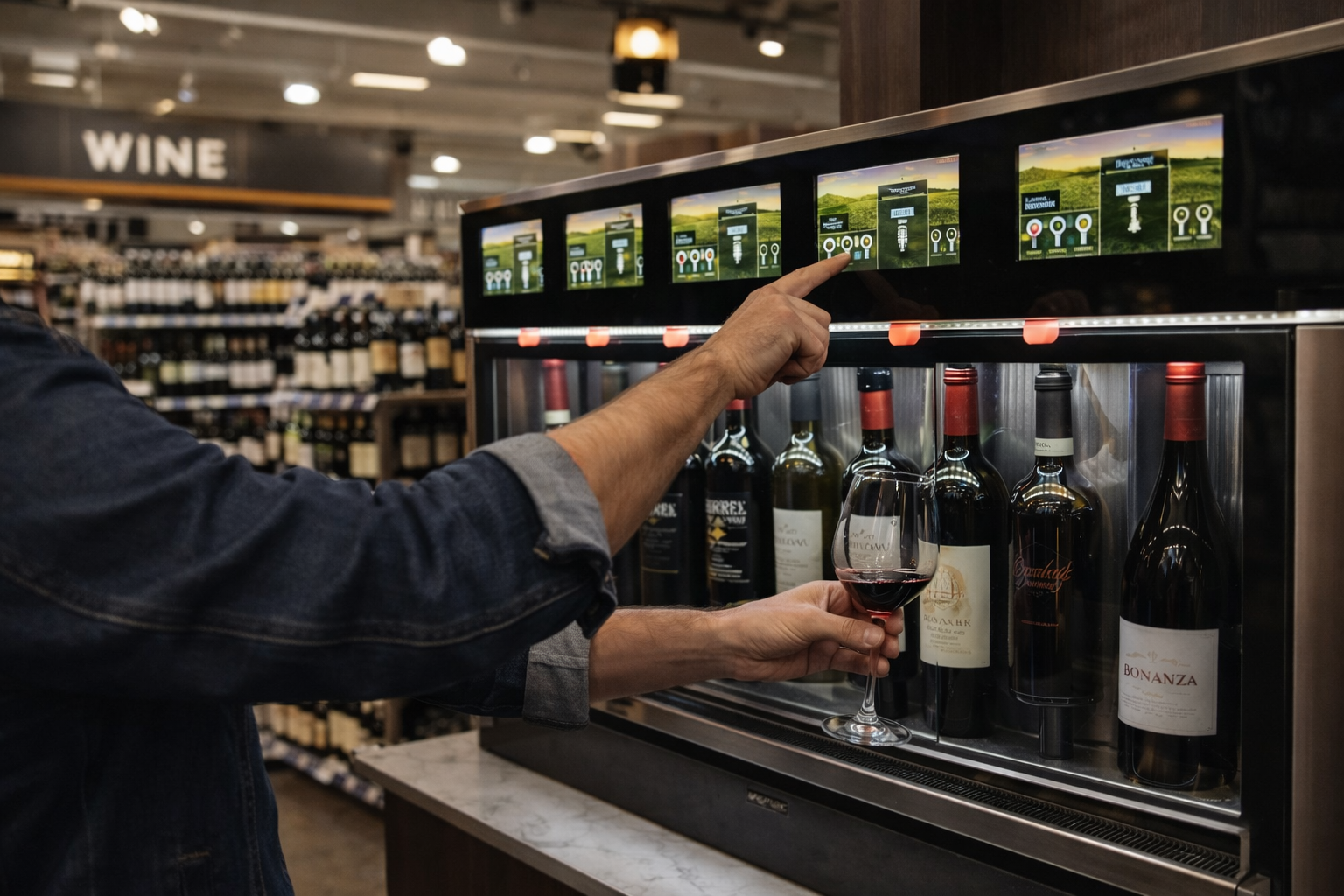
Enomatic enables grocery stores to create controlled, self-service wine sampling displays that fit seamlessly into existing retail environments.
With Enomatic systems, grocery stores can:
Offer 1-ounce sample pours, reducing waste
Let customers taste before committing to a bottle
Present wine stories, tasting notes, and pricing at the point of sampling
Maintain precise portion control and accountability
Keep wines fresh through preservation technology
Instead of guessing, customers experience the wine—and that experience drives purchase.
Sip-and-Shop: Increasing Dwell Time and Basket Size
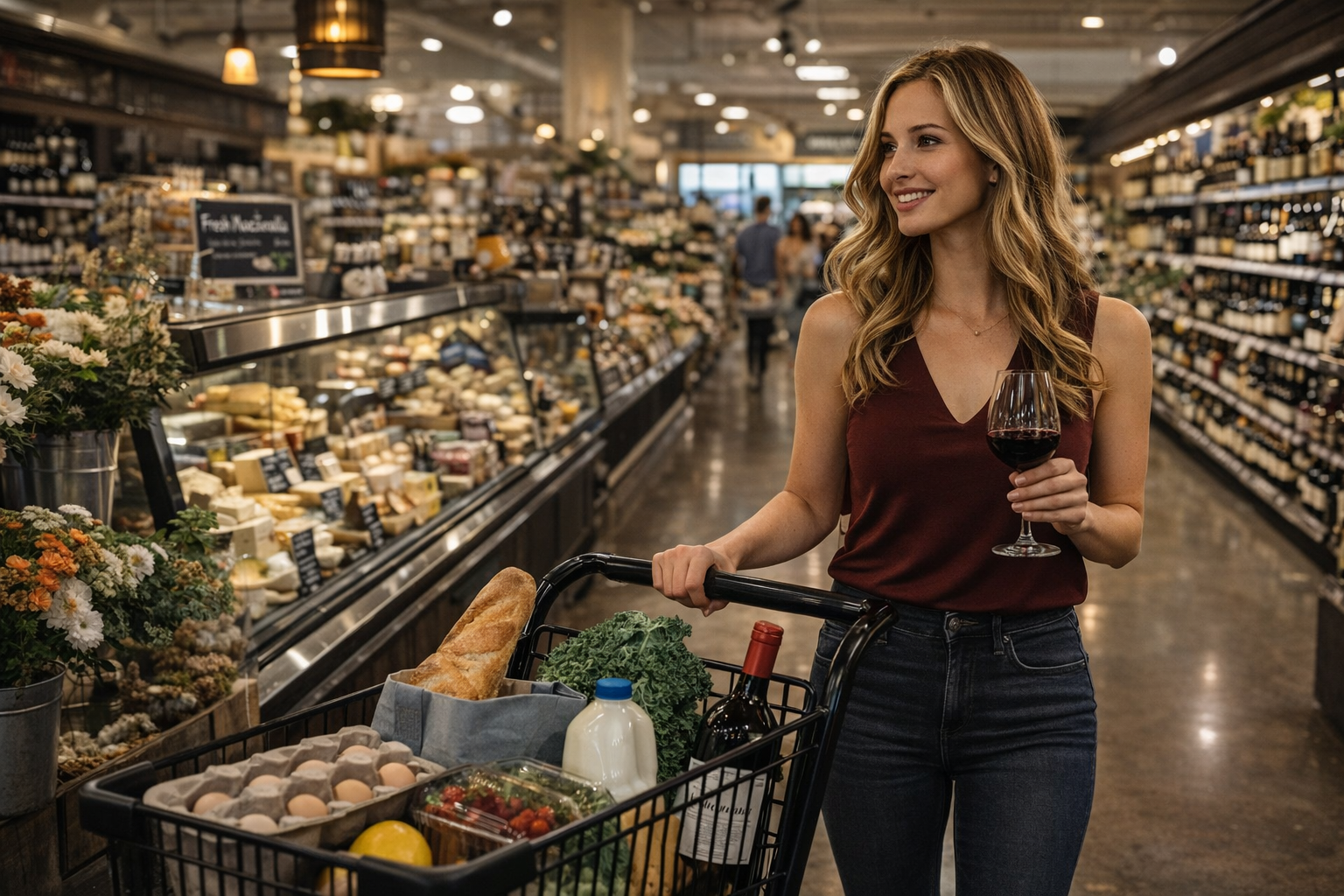
In markets where licensing allows, some grocery stores are taking the experience even further with sip-and-shop programs.
With the right setup, customers can:
Purchase a glass of wine
Enjoy it while walking the store
Spend more time browsing and shopping
This approach has been shown to:
Increase dwell time
Increase average basket size
Create a more premium, experiential environment
Wine becomes part of the shopping experience—not just another SKU on a shelf.
Self-Serve and Self-Pour: Designed for Grocery Environments
Enomatic offers both self-serve and self-pour dispensers that can be easily retrofitted into grocery stores without major renovations.
These systems are:
Modular and flexible
Scalable from small displays to larger installations
Designed for high-traffic retail settings
Built to ensure compliance, control, and consistency
Most importantly, they allow grocery stores to sell more wine without adding labor.
Technology That Works as a Silent Salesperson
Wine sells better when customers understand it.
But staffing every wine section isn’t realistic.
That’s where technology fills the gap.
By adding a simple wine dispensing solution, grocery stores can:
Educate customers without staff intervention
Increase trial of new and premium wines
Improve conversion from browsing to buying
Drive higher revenue from existing square footage
The Bottom Line
Wine doesn’t need more shelf space to sell better.
It needs engagement.
With the right technology in place, grocery stores can turn their wine sections into interactive, revenue-driving experiences—without increasing labor costs.
