
How Restaurants Can Increase Wine Sales by 30% Using Self-Pour Technology
Wine has always been one of the highest-margin and most experience-driven categories in hospitality. Yet across the industry, wine sales are declining year over year. For many restaurant owners, this isn’t just a trend — it’s a profitability problem.
The good news? The solution isn’t necessarily hiring more sommeliers or overhauling your entire beverage program.
In many cases, restaurants can increase wine sales by 30% or more simply by implementing the right technology.
Let’s break down the real problem — and the opportunity.
The Two Core Problems Behind Declining Wine Sales
1. The Staff Problem: Knowledge & Turnover
Hospitality businesses everywhere are facing staffing challenges:
High turnover
Inconsistent training
Difficulty hiring knowledgeable wine staff
Limited time for education and onboarding
Wine is a complex category. Explaining varietals, regions, tasting notes, and value requires knowledge and confidence. Unfortunately, most frontline staff simply don’t have the training — or the time — to properly sell wine.
When staff can’t confidently recommend or explain wine:
Guests default to beer or cocktails
Higher-end bottles don’t move
Upselling opportunities are missed
Training programs help — but in a high-turnover industry, knowledge often walks out the door.
2. The Customer Problem: Confusion & Perceived Value
Wine consumption is shifting, especially among younger demographics.
Many guests:
Don’t understand wine terminology
Feel intimidated ordering wine
Don’t perceive value in higher-priced options
Prefer experiential, interactive purchases
If a guest doesn’t understand the wine, they won’t buy it — or they’ll default to the cheapest option.
This creates a perfect storm:
Staff can’t confidently explain wine
Customers don’t understand or see value
Wine sales decline
Why Wine Still Matters to Your Profitability
Despite declining trends, wine remains one of the most consistent and profitable beverage categories.
Unlike cocktails:
No risk of overpouring spirits
Controlled portion sizes
Stable margins
Consistent product
Wine also increases average ticket size. A guest who adds a glass (or two) of wine dramatically increases overall revenue per table.
The challenge isn’t the product.
The challenge is how it’s presented and sold.
The Technology Solution: Self-Pour Wine Systems
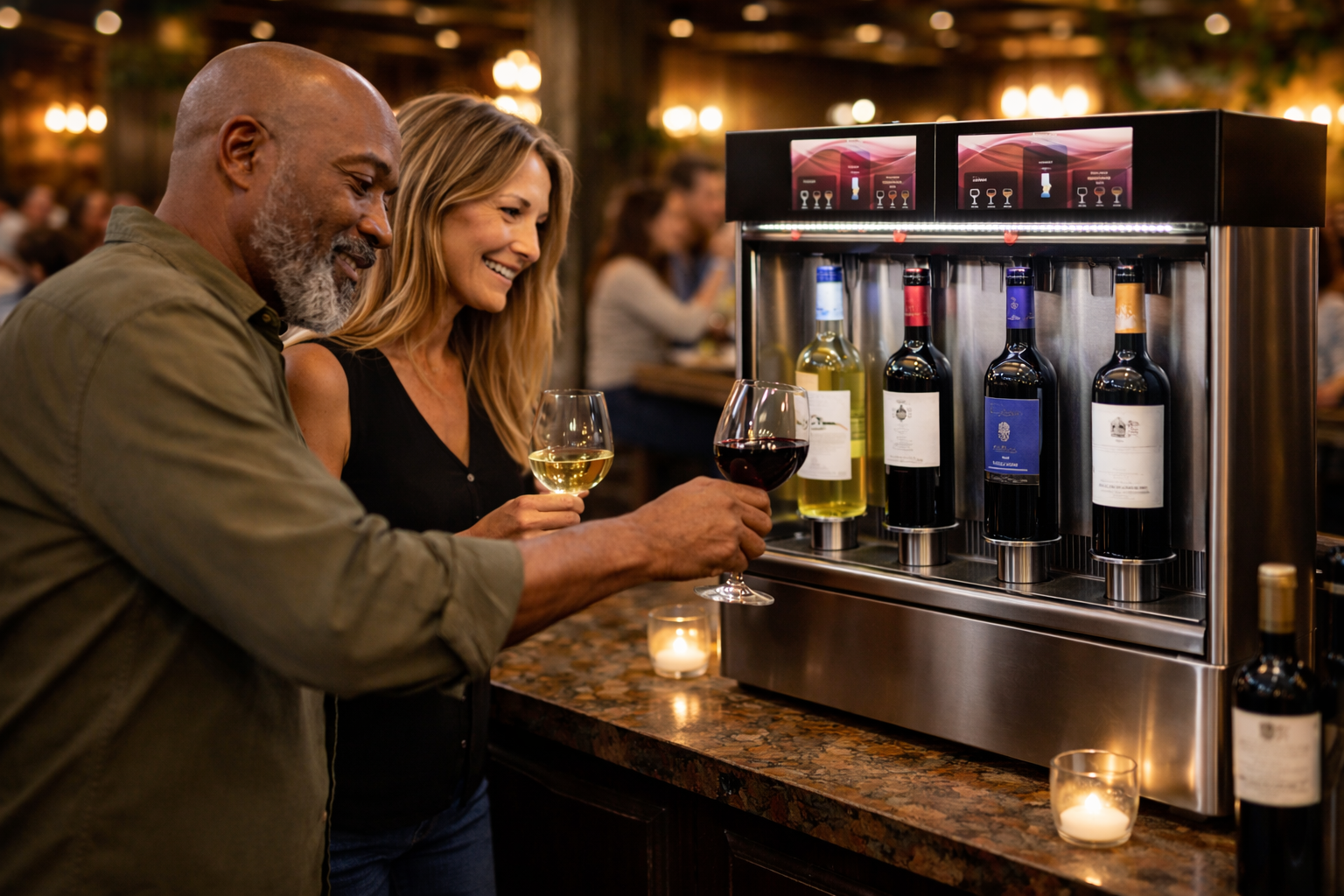
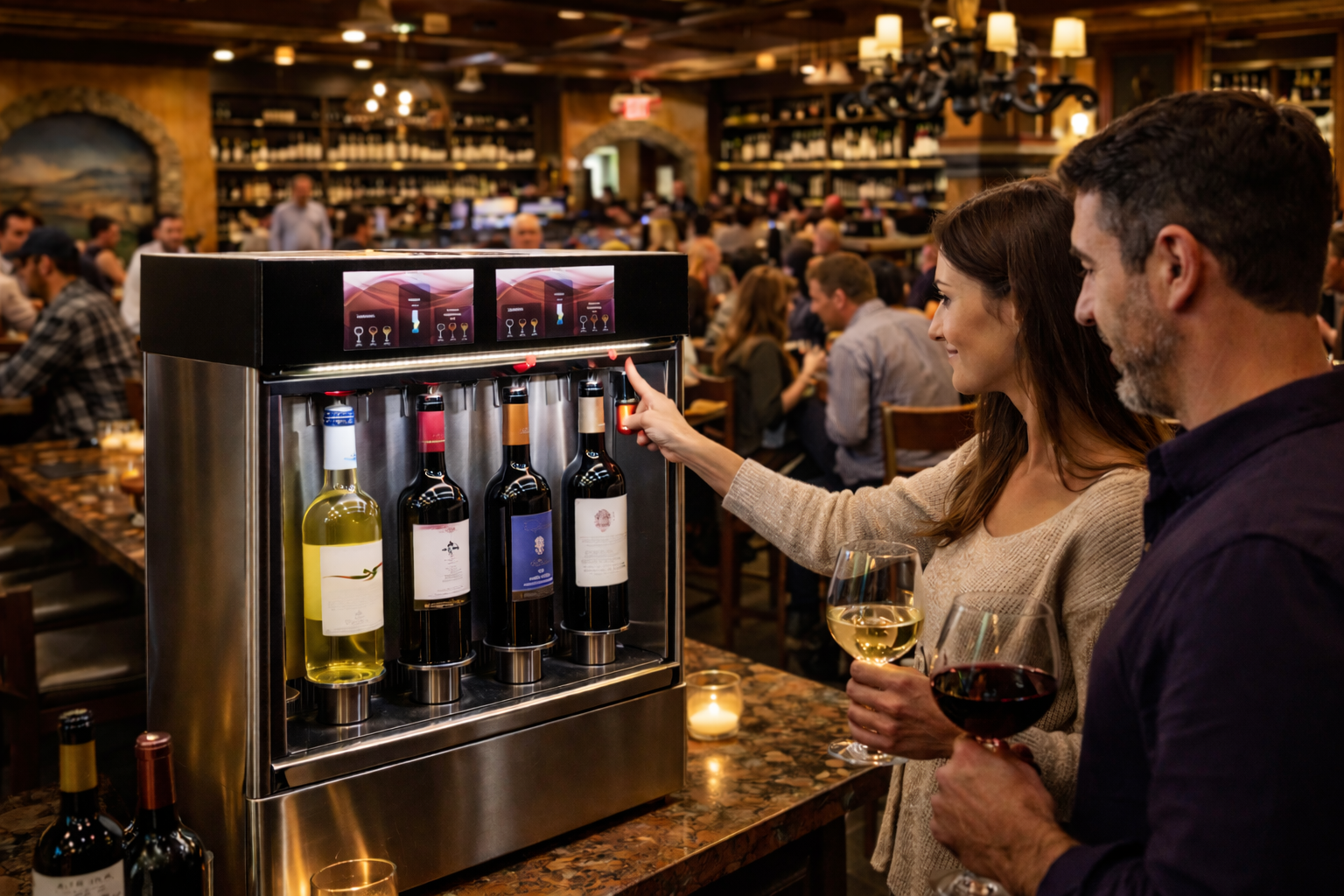
Self-pour wine technology addresses both the staff problem and the customer problem simultaneously.
By installing automated wine dispensers that allow guests to pour their own wine, restaurants create:
An interactive guest experience
Built-in wine education
Portion control and consistency
Higher engagement
Higher sales
How It Works
Guests receive an activation card and can:
Taste 1 ounce
Pour 3 ounces
Pour 5 ounces
They can sample multiple wines before committing to a full glass — without needing a staff member to explain each one.
This removes intimidation and increases experimentation.
Why Self-Pour Increases Wine Sales by 30%
Here’s what typically happens when restaurants implement self-pour technology:
1. More Wines Sold Per Guest
Because guests can try smaller pours:
They sample more varieties
They purchase more total ounces
They are more likely to upgrade to premium wines
Instead of committing to one glass, guests explore.
Exploration drives volume.
2. Higher Per-Ounce Pricing
When wine is sold in smaller increments:
You can price per ounce higher than traditional glass pricing
Guests focus less on bottle cost and more on experience
This increases profitability per bottle.
3. Reduced Waste = Higher Margins
Modern systems like Enomatic use preservation gas technology to protect opened bottles.
Benefits include:
Open bottles stay fresh for up to 30 days
Minimal oxidation
Reduced spoilage
Expanded premium wine offerings without fear of waste
Restaurants can confidently offer higher-end wines by the glass without worrying about pouring them down the drain.
4. Built-In Education Without Staff Dependence
Self-pour systems typically include:
Digital tasting notes
Region and varietal descriptions
Pricing transparency
Visual displays
The machine becomes your wine educator.
This reduces reliance on staff knowledge and makes onboarding easier in high-turnover environments.
Where Self-Pour Technology Works
Self-pour wine systems are not limited to fine dining restaurants.
We see strong results in:
Full-service restaurants
Fast casual concepts
Wine bars
Country clubs
Hotels
Airports
Grocery stores
Liquor stores
In each case, the value proposition is the same:
More engagement. More exploration. More sales.
The Experience Factor
Today’s consumers want experiences.
Self-pour transforms wine from a passive purchase into an interactive event. Guests walk up, explore labels, sample regions, compare varietals, and share the experience socially.
It turns wine into entertainment.
And when wine becomes experiential, it becomes profitable.
The Financial Impact
When implemented correctly, many operators see:
20–30% increase in wine sales
Higher average check sizes
Reduced spoilage and waste
Improved margins on premium wines
Reduced training dependency
In an environment where labor costs are rising and wine sales are declining, leveraging technology creates a competitive advantage.
Final Thoughts: Technology Is the Equalizer
The wine category doesn’t have to decline in your restaurant.
By using self-pour technology, you:
Remove intimidation for guests
Reduce reliance on staff knowledge
Control portions and margins
Extend bottle life
Create an experience customers want
In today’s hospitality environment, technology isn’t replacing hospitality — it’s enhancing it.
And in many cases, it’s the simplest path to increasing wine sales by 30% or more.
